Accumulator Structures in Multi-Sport Wagering: Platform Variations Explained
Accumulator structures combine multiple selections into single wagers where each outcome must succeed for the overall bet to pay out, and platforms across sports handle these combinations with distinct calculation methods and payout formulas. Data from industry reports shows that football, basketball, and tennis selections often form the backbone of these structures, while operators adjust odds multipliers based on sport-specific risk profiles and event correlations.
Core Mechanics of Accumulator Construction
Operators calculate accumulator returns by multiplying individual odds together before applying stake amounts, yet differences emerge when platforms incorporate same-game accumulators versus cross-sport selections that span separate events. Researchers at academic institutions have tracked how correlation factors between selections influence final payouts, with basketball point spreads paired alongside football match results creating unique risk profiles that platforms address through adjusted pricing models.
August 2026 brought updates to several major platforms as they refined their accumulator builders to handle increased volumes during international tournaments, and these changes included automated suggestions for multi-sport combinations that previously required manual assembly by users.
Platform-Specific Approaches to Multi-Sport Selections
European-based platforms typically structure accumulators with fixed maximum leg limits ranging from ten to fifteen selections, whereas North American operators often impose sport-specific caps that restrict basketball and baseball pairings within the same ticket. These variations stem from regulatory frameworks that differ by jurisdiction, and a report issued by the Nevada Gaming Control Board details how state-level rules shape accumulator design features on licensed sites.
Platforms also differ in their handling of cash-out options for accumulators that remain live during events, with some services offering partial settlements at predefined stages while others maintain all-or-nothing structures until completion. Observers note that tennis accumulators involving set and game handicaps present particular challenges because of the granular scoring systems that platforms must integrate into their calculation engines.
Odds Compilation and Risk Management Factors
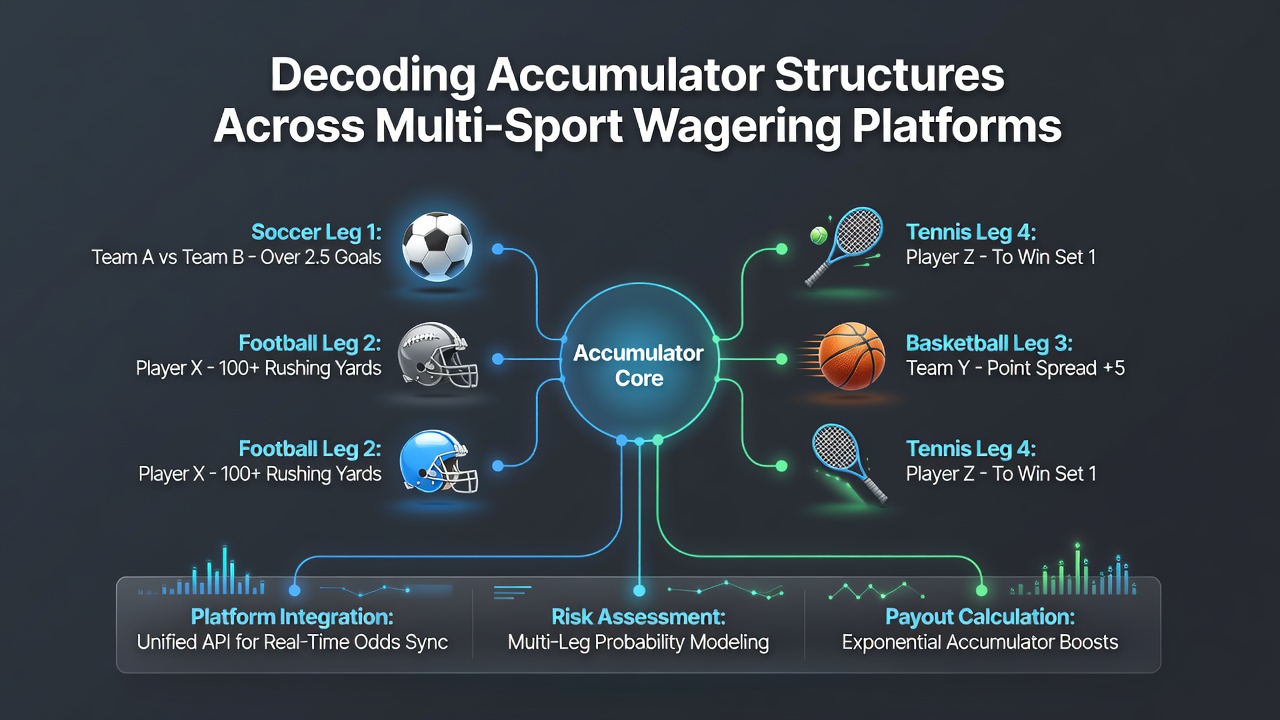
Bookmakers adjust accumulator odds to account for the reduced probability of multiple outcomes occurring simultaneously, and they apply these adjustments differently depending on whether selections come from the same sport or cross into unrelated disciplines. Australian regulatory data compiled by the Victorian Commission for Gambling and Liquor Regulation indicates that multi-sport accumulators carry higher house-edge margins in some jurisdictions compared with single-sport variants due to the added complexity of pricing uncorrelated events.
Those who analyze betting data find that platforms frequently introduce boosted accumulator promotions during major events such as the Olympics or World Cup periods, yet the underlying structure of leg limits and minimum odds requirements stays consistent year-round. The integration of live betting into accumulator tickets adds another layer where in-play odds fluctuate and operators must recalculate potential returns in real time across multiple sports simultaneously.
Technical Implementation Across Different Systems
Modern wagering platforms rely on centralized databases that store pre-calculated accumulator templates for popular sport combinations, and these templates allow rapid generation of tickets that mix football goals with basketball totals or tennis match winners. Developers design these systems to prevent invalid combinations such as mutually exclusive selections from the same match, and the automation reduces errors that once occurred when users assembled complex multi-sport wagers manually.
Industry associations have documented how API connections between sports data providers and betting platforms enable the real-time updates necessary for accumulator functionality, while legacy systems in certain regions still require manual intervention for cross-sport calculations. This technical divide affects how quickly platforms can offer new accumulator types when emerging sports gain popularity among bettors.
Regulatory Influences on Accumulator Offerings
Government agencies in various regions impose rules that limit the maximum payout on accumulators or require specific disclosures about the probability of winning multi-leg bets, and these requirements shape how platforms present accumulator options to users. Canadian provincial regulators, for instance, mandate clear explanations of how combined odds translate into potential returns, which has prompted some operators to include educational pop-ups within their accumulator builders.
Platforms operating across borders must therefore maintain separate accumulator structures that comply with each jurisdiction's requirements, and this segmentation creates noticeable differences in available features for users accessing the same brand through different regional sites.
Conclusion
Accumulator structures continue to evolve as platforms integrate new sports and refine their technical capabilities, while regulatory bodies maintain oversight that influences design choices across regions. Data from multiple sources shows consistent patterns in how operators manage multi-sport combinations, and users encounter these variations whenever they compare offerings from different providers. The core principles of multiplied odds and all-selections-must-win conditions remain standard, yet the implementation details differ enough to affect both strategy and potential returns depending on the chosen platform.